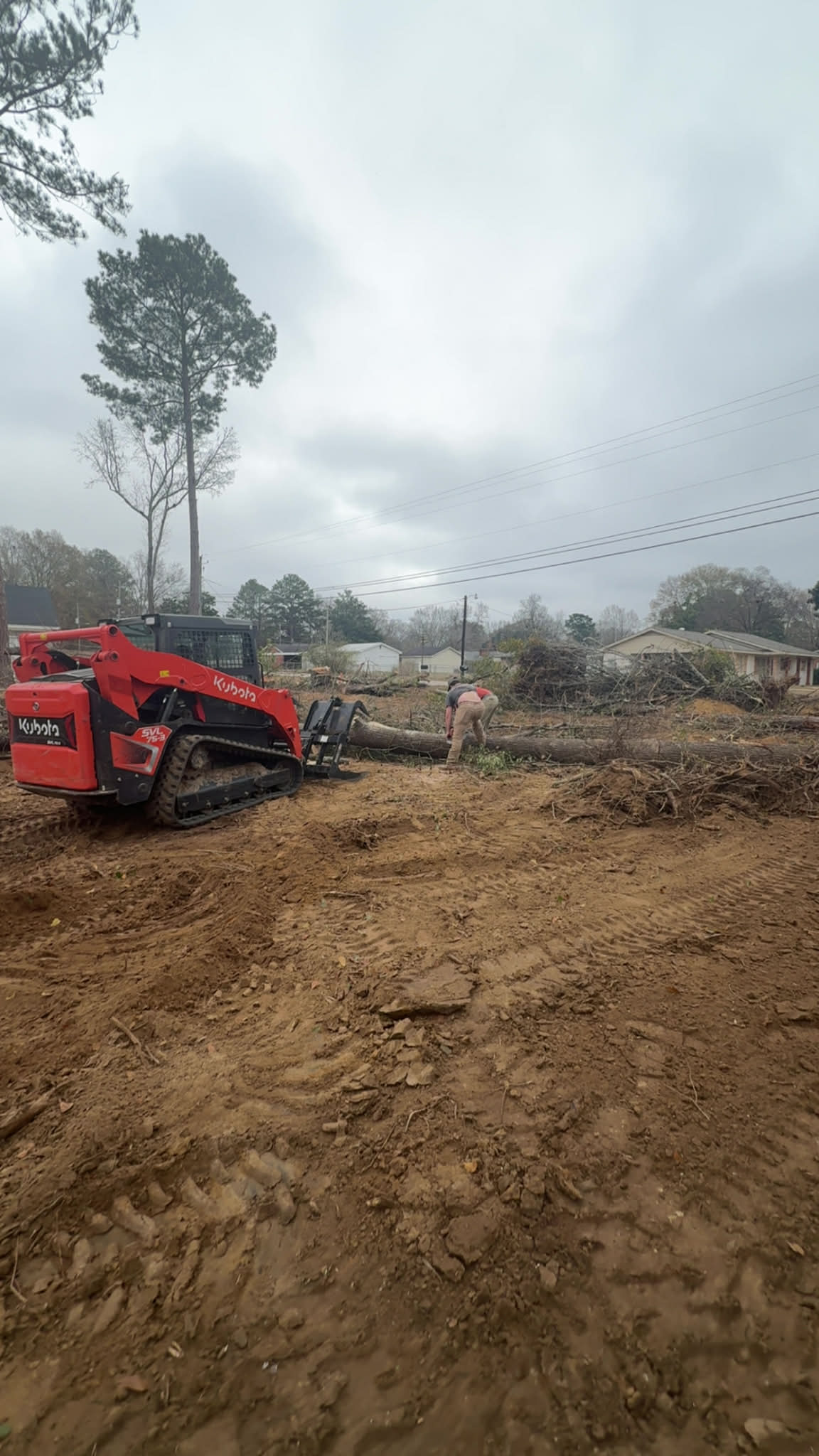
Alabama is famous for its beautiful pine forests. From the towering Loblolly to the classic Longleaf, pines are everywhere in the "Heart of Dixie." But sometimes, those pines have to go. Maybe a tree is leaning toward your house, or maybe you’re clearing a whole lot to build your dream home. At Carroll Agridynamics, we handle pine removal every single day. If you’re a homeowner or a business owner looking for a simple, clear guide on what this costs in 2026, you’re in the right place. In this article, we’ll break down the prices by tree size, talk about bulk clearing, and even show you how you might be able to make some money back from your timber!
Why Does Pine Tree Removal Cost What It Does?
Removing a pine tree is a bit different than clearing brush. It takes specialized equipment, skilled climbers, and a lot of safety gear. In Alabama this year, the cost to remove a single pine tree usually falls between $250 and $1,600. If you have a huge lot with dozens of trees, the "per tree" cost goes down, but the total project will usually range from $850 to $6,000 per acre.
The biggest factor in the price is the height of the tree. The taller the tree, the more dangerous it is to take down. Our crews have to spend more time "limbing" the tree (cutting off the branches) and lowering the trunk in small sections. Here is a quick look at the average prices by size for 2026:
- Small Pines (Under 30 feet): These are usually young trees or saplings. They are relatively easy to handle and cost between $150 and $500 to remove.
- Medium Pines (30 to 60 feet): This is the most common size for residential yards. These require more equipment and safety planning, costing between $435 and $1,200.
- Large Pines (60 to 80 feet): These are mature trees that require a lot of skill to remove safely. Expect to pay $800 to $2,000.
- Extra-Large Pines (Over 80 feet): These are the giants of the forest. Removing them is a major operation that can cost $1,160 to $2,500 or more.
Another thing that changes the price is accessibility. If the tree is in the middle of a big open field, it’s much cheaper to remove. But if it’s leaning over your roof, hanging over power lines, or stuck behind a fence where we can’t get our big trucks, the price will go up. In these cases, we have to use specialized ropes and rigging to make sure nothing gets damaged. This can add 25% to 50% to the base price of the job.
The "Extras" That Add Up
When you get a quote for tree removal, make sure you know exactly what is included. Many times, the base price is just for cutting the tree down. There are several other services you might need:
Stump Grinding and Removal
Once the tree is gone, you’re left with a stump. If you’re just clearing land for a field, you might not care. But if you want to grow grass or build a driveway, that stump has to go. Stump grinding usually costs $100 to $500 per stump. The price depends on how wide the stump is and how deep the roots go. If we have to dig the whole stump out with an excavator (stump removal), it can be more expensive than just grinding it down below the surface.
Cleanup and Debris Disposal
A big pine tree creates a massive amount of branches and needles. If you want us to haul all that waste away, expect to pay an extra $70 to $200 per tree. Some customers choose to keep the wood for firewood or have us chip it into mulch to save on these fees. If you want us to run everything through a wood chipper on-site, we usually charge $75 to $125 per hour for that service.
Permits and Paperwork
Depending on where you live in Alabama, you might need a permit to remove a tree. This is especially true in cities like Prattville, Montgomery, or Birmingham. Permits usually cost between $60 and $260. We can help you figure out if you need one before we start work.
Making Money Back: Can You Sell Your Timber?
Here is some good news: your pine trees might actually be worth something! If you are clearing a large area (usually 5 acres or more), you might be able to sell the wood to a local mill. This is called "stumpage value." While it won't cover the whole cost of the clearing, it can definitely help offset the price.
As of early 2026, here are the average prices mills are paying for pine in Alabama:
- Pine Sawtimber: This is for the best, straightest trees used for lumber. It pays $17 to $30 per ton.
- Pine Chip-n-Saw: This is for medium-sized trees. It pays $17 to $24 per ton.
- Pine Pulpwood: This is for smaller or crooked trees used for paper and cardboard. It pays $6 to $13 per ton.
To sell your timber, the trees usually have to be in good health and easy for a logging crew to get to. If you only have one or two trees in your yard, a mill won't come out to get them, but for larger projects, this is a great way to save money.
Financial Help and Incentives in Alabama
Did you know there are programs that will actually help you pay for forest management? The state of Alabama wants to keep our forests healthy, so they offer several types of financial assistance:
Southern Pine Beetle (SPB) Prevention: These little beetles can kill a whole forest of pines. The Alabama Forestry Commission often has "cost-share" programs. They might pay for part of the cost to thin out your trees or do a prescribed burn. This makes your forest healthier and less likely to get attacked by beetles.
Emergency Forest Restoration Program (EFRP): If your trees were damaged by a natural disaster—like a hurricane, a tornado, or a severe drought—you might be eligible for this federal program. It can pay back up to 75% of the cost to restore your forest health. This is a huge help for landowners after a bad storm.
Environmental Quality Incentives Program (EQIP): This program is run by the USDA. They offer money to help you grow specific types of pines that are native to Alabama, like the Longleaf or Shortleaf pine. This is especially popular for landowners in North Alabama who want to restore the natural landscape.
Is It Time to Remove Your Pines?
Sometimes it’s obvious when a tree needs to go. If it’s dead, rotten, or has been hit by lightning, it’s a safety hazard. But other times, it’s a harder choice. Here are a few signs that your pines might need a professional look:
- Leaning: If a tree has suddenly started to lean, its roots might be failing. This is a major emergency!
- Bark Falling Off: This is often a sign of disease or a beetle infestation.
- Brown Needles: If the needles at the top of the tree are turning brown, the tree might be dying from the top down.
- Mushrooms at the Base: This usually means the roots are rotting underground.
At Carroll Agridynamics, we don’t just cut trees down—we help you make the best decision for your property. Sometimes a tree can be saved with a little care, and other times it’s best to remove it before it falls on something important.
Conclusion: Planning Your Pine Removal Project
Removing pine trees in Alabama doesn't have to be a headache. By understanding the sizes, the extra costs, and the potential timber value, you can create a budget that works for you. Remember that safety should always be your number one priority. Pine trees are heavy and unpredictable, and trying to remove them yourself can be very dangerous.
We’ve been serving the Prattville, Montgomery, and Central Alabama area for years. We know the local soil, the local trees, and the local rules. When you work with Carroll Agridynamics, you’re getting more than just a crew with a saw—you’re getting a partner who cares about your land as much as you do.
Want a free estimate? We’d love to come out and take a look at your pines. We’ll give you a clear, honest quote and talk through all your options, including timber sales and cost-share programs. Give us a call today and let’s get to work!
Need help with your land?
Carroll Agridynamics provides professional land management services across Prattville, Montgomery, and Central Alabama. Contact us today for a free estimate on your project.